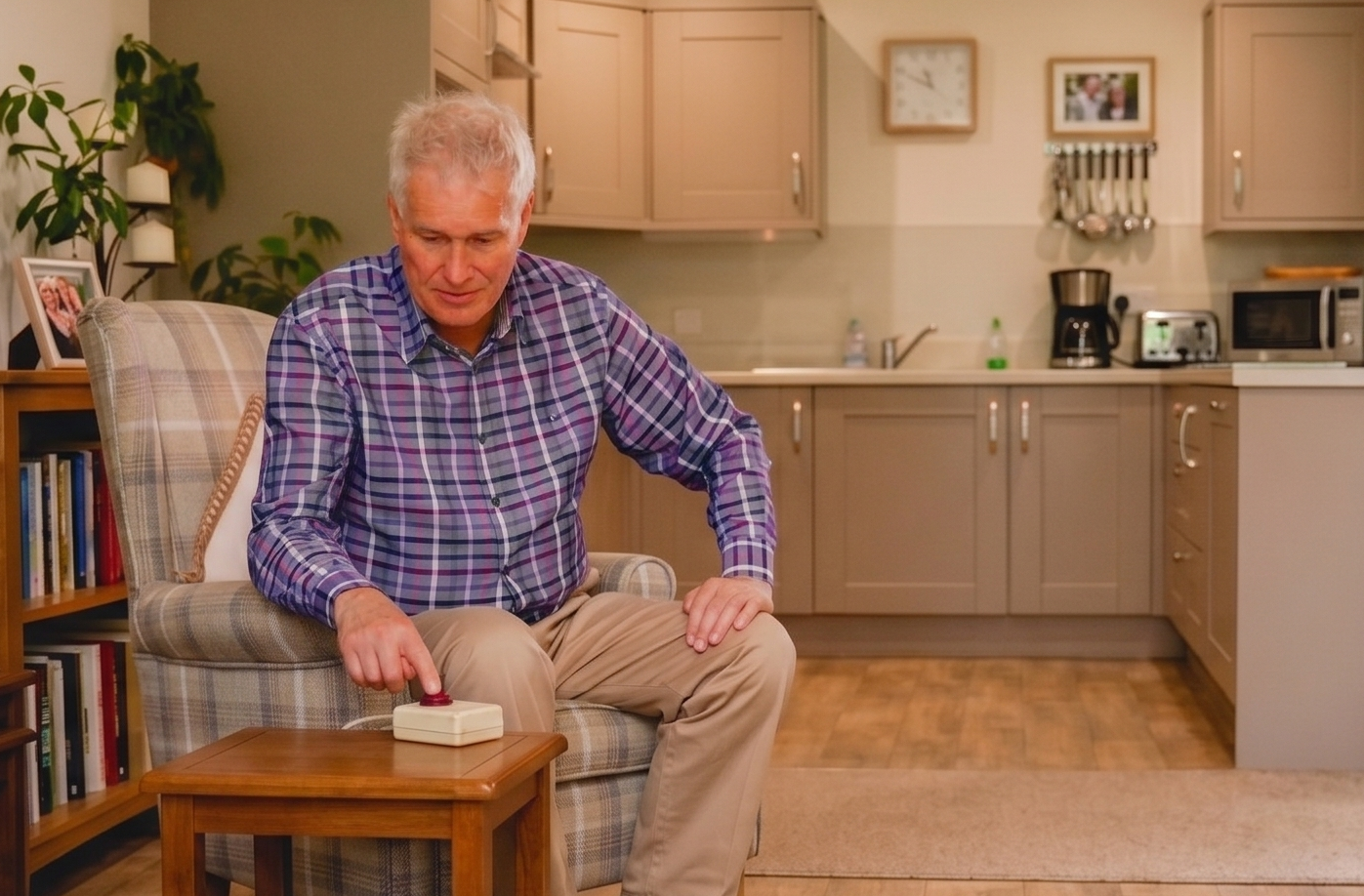
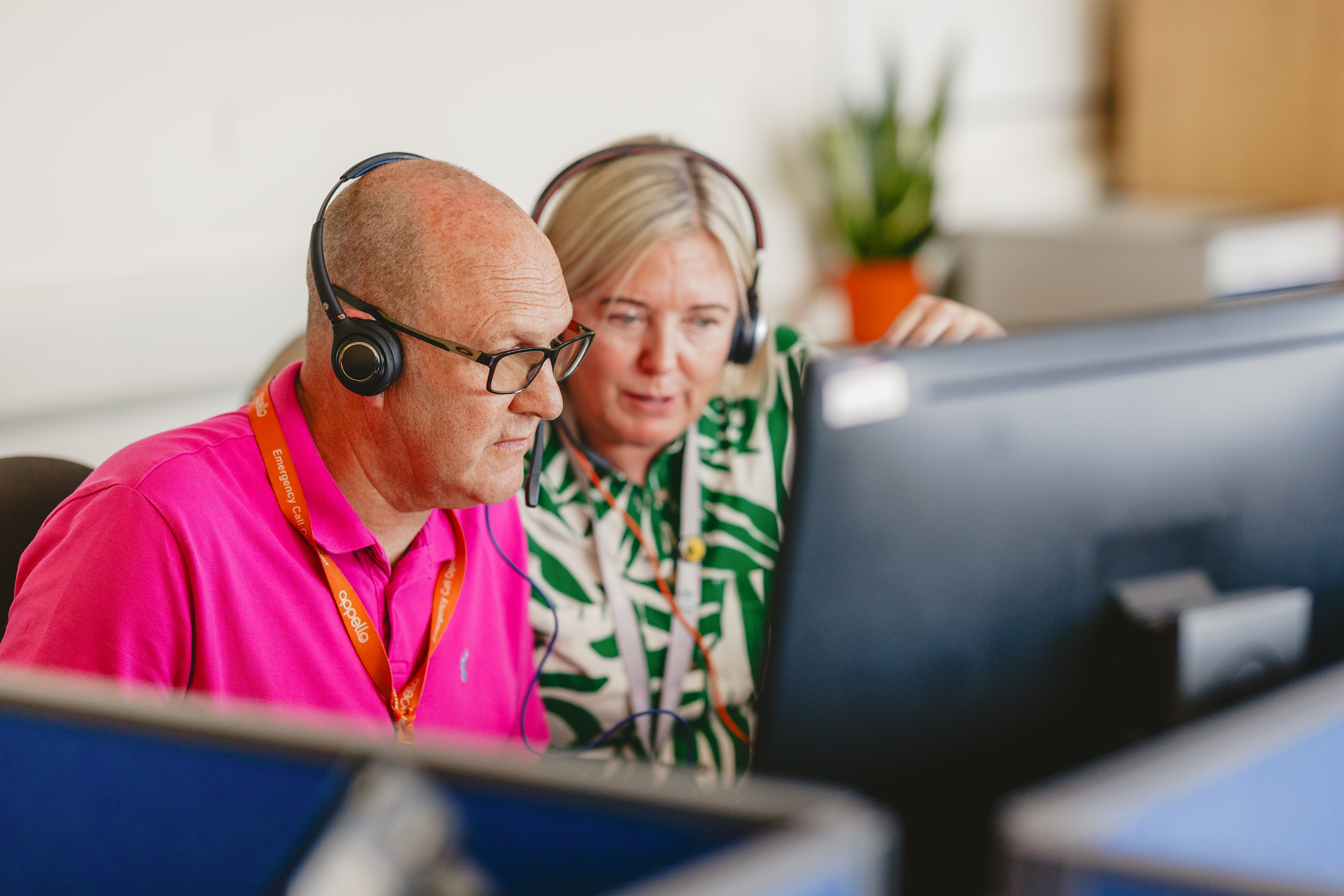
Our dedicated team of operators are at the heart of our award-winning Careline. They provide vital support to thousands of people across the UK, whether responding to emergency telecare alarm calls, offering proactive wellbeing checks or assisting with everyday issues. But what does their day-to-day role look like?
Our new series, Careline Conversations, takes a peek behind the scenes with three of our experienced operators:
- Joanna Bennet, Customer Services Inbound Operator
- Sarah Frowley, Emergency Helpline Operator
- Wendy Thorpe, Emergency Helpline Operator
In part one of the series, they discuss the type of calls they receive as a telecare operator, what a typical day looks like and the impact they have on those who rely on these essential services.
What types of calls does Careline handle?
Sarah Frowley: “The calls are grouped into five different categories. You generally start covering the doors and then the communal areas before dealing with emergency calls from the residents once you've got more experience. The final two call categories are fire and the escalation line.”
Joanna Bennet: “As a door operator, you give people, such as carers, access to the buildings. You need to make sure they give the correct password and can get in without any problems. We have to be very strict to make sure they can be let in. I also do outbound wellbeing calls, where we check in with the residents. I love that as I think sometimes we're the only people they speak to. I think if we can give them a couple of minutes, it can make a big difference to them.”
Wendy Thorpe: “I'm on the monitoring side and I'm really happy doing that as I enjoy the day to day interaction with the residents. But I get a smattering of everything. I can be swapped onto different call categories to help out if one area is especially busy, so I might get moved to deal with the communal calls, for example.”
SF: “I'd say the number one type of emergency calls we get relate to falls. Sometimes the person is injured and other times they just can't get themselves back up. Either way, this generally involves organising an ambulance. Even if they're not obviously injured, we need to make sure they have somebody who's trained in lifting to help get them off the floor as you can cause more damage if you don't know the right way to do this.”
JB: “My passion is doing the emergency calls because you feel that you're really helping. You can build a rapport during the call. That for me is really rewarding. I had a call recently where the gentleman was very depressed as his children won't come to see him. By the end of the call he said, 'I feel so much calmer now, thank you.' It's really nice to hear that.”
What does a typical shift look like?
SF: “We can literally get any type of call – you never know what the next one will be. Sometimes it's an accident, if they've pulled the wrong cord in the bathroom or knocked the alarm. There might be a leak coming through the ceiling. Or it can be an emergency situation, with a husband saying he's got his wife there and she's not breathing.”
WT: “During the week, there tends to be a lot of the routine test calls – house managers testing fire panels or residents pressing the buttons to check their alarm is working – as well as a smattering of emergency calls. I sometimes do half a night shift and find you get more general emergency calls or perhaps a no-speech call where they've pressed their alarm in their sleep. But it's nowhere near as busy as during the day.”
SF: “Yes, you get totally different calls during the night shift. I don't know what it is, there's a lot of cooking toast and things at 4am, which can set the smoke detector off if the toast gets forgotten about. During the day, there's a lot of calls from staff testing the system, so you confirm the address and close the call quite quickly. Both shifts are busy but the night calls tend to be longer to deal with.”
What’s the process for dealing with the calls?
WT: “There are so many different procedures, depending on the type of call. We have a new system now, so as soon as the call appears, the relevant procedure pops up on your screen, which is absolutely brilliant.”
SF: “Yes, it’s really useful as we’re dealing with people under different local authorities, who all have different procedures. With the previous system, you had to manually find the information, so this is a lot easier to make sure we’re following the right procedure for each customer. For emergency calls, we have a series of questions that we need to ask to source the necessary information to pass onto the ambulance service.”
WT: “The first thing I always do is offer sympathy but you also need to ascertain what their symptoms are. I try to find out as much information as I can, which isn't always easy. If they've fallen, we need to know if they're able to communicate properly. How long have they been on the floor, what caused the fall, are they injured or in pain, are they hot or cold? If I can't get enough details and I'm concerned, I'll call an ambulance.
It sounds like the shifts are busy
JB: “The calls are constant and you're mindful of even taking a quick bathroom break, although sometimes you just have to go! But you can sit there for three hours not moving and just taking the calls. That's what we're here for, that's the most important thing.”
SF: “The call volumes are huge, we're back-to-back dealing with them. I take a lot more calls during the day because you get the staff testing the systems. For an emergency call, you're probably looking at around 7-8 minutes if the person requires an ambulance. You need to establish what's wrong, call through to the ambulance crew and then go back to the person to confirm help's been arranged.”
WT: “No two calls are ever the same! It could be a house manager, engineers, a person’s next of kin or a resident. I like the challenge that brings, I thrive on it.”
---
Careline offers 24/7 monitoring and emergency assistance for older people and vulnerable individuals living in supported housing or their own homes. As the UK's largest Careline provider, we enable people across the UK to live safely and independently, working with housing providers and local authorities.
Find out more about our award-winning Careline monitoring services.
/Resource%20Cover%20Images/Future-Proof%20Cover%20Image%20-%20No%20background.png)
A Helping Hand with Your Digital Switchover
While the journey may seem overwhelming, just know we have plenty of insights to guide you through.
/Brochure%20Download%20Banners/Product%20and%20Services%20Catalogue%20Front%20Cover%202.png?width=1000&height=592&name=Product%20and%20Services%20Catalogue%20Front%20Cover%202.png)
.jpg)