
Winter consistently tests the resilience of frontline services, including telecare. We look at what it takes to keep your service running smoothly during the colder months – with a checklist for your provider, so you can be confident they will deliver the right support, whatever the season brings.
Freezing temperatures, increased medical incidents and longer call times. Winter places many demands on your monitoring service, with older and vulnerable residents seeking help with the cold weather, illness and isolation.
Seasonal spikes see:
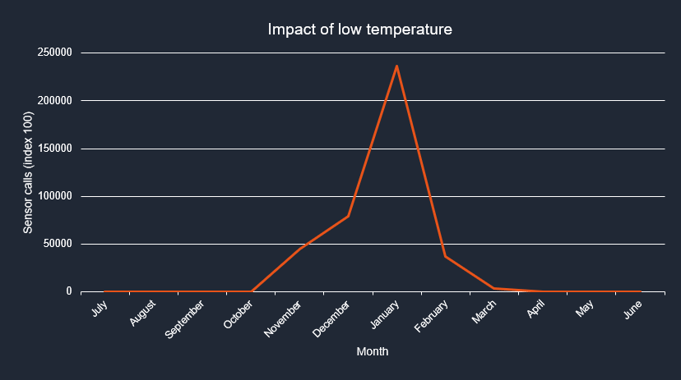
- More environmental alerts - thousands of temperature-related calls can be recorded in a single winter month for issues such as bust pipes, compare to just a handful in March.
- More emergency calls - cold, icy conditions lead to a greater number of falls and other medical issues, such as chest infections or breathing difficulties.
- More time spent on each call - operators need to provide reassurance, coordinate support from family members, carers and emergency services, and carry out increased welfare checks.
This is compounded by the strain on the emergency services over the winter.
With ambulance waits likely to be longer, your provider must seamlessly absorb these seasonal pressures while maintaining reliable support when it's most needed.
“Demand for ambulance services increases by 5.7% during October – January and this winter is expected to be the busiest yet.” - Joe Chilton, General Manager, Clinical Hub, London Ambulance Service
The four key elements of a resilient winter operation
1. Workforce readiness
Having enough fully trained operators to take calls is the first line of defence.
Planning needs to begin earlier in the year. Summer recruitment gives new team members time to complete onboarding, gain core operational experience and build skills before demand peaks.
In particular, they need to be able to:
- Manage high-anxiety situations calmly and with empathy.
- Tune into subtle non-verbal cues, such as changes in breathing, long pauses or hesitation.
- Spot early warning signs of winter-related conditions, such as hypothermia, cold-induced respiratory distress, or severe fall injuries.
2. Operational continuity
Flexible workforce planning is essential. Your monitoring centre must be able to scale capacity quickly in response to sudden weather events and surges in call volume.
Remote working plays a crucial role. With a modern cloud call-handling platform, operators can log in securely from home, providing:
- Consistent staffing levels – no one has to travel in hazardous conditions to reach the office.
- Immediate surge capacity – off-duty or standby operators can take calls within minutes.
- A healthier team – less exposure to seasonal illness makes it easier to keep staffing at full strength.
- Built-in disaster recovery – if a site is hit by a problem such as a local power cut, operators at other locations can keep answering calls.
3. Smart triaging
Alongside the rise in winter emergencies, operators still need to handle usual day-to-day activities. But manually clearing routine calls, such as equipment tests or accidental button presses, costs valuable time when queues are building.
This is where intelligent filtering and automated call handling can make all the difference:
- Protecting operator capacity – keeping the focus on the highest-risk calls.
- Providing a better resident experience – routine test calls and door entries are handled without anyone waiting on hold.
When used carefully, ensuring genuine emergencies are never filtered out, smart triaging ensures every resident gets the support they need, even during the busiest times.
4. Data driven quality and management
Operators' ability to help residents is underpinned by accurate information, especially during winter when ambulance services are stretched. It helps them act with speed and confidence, which can make a critical difference to the outcome.
Imagine a resident has fallen during the night and can't reach the door. An ambulance has arrived on scene but the key safe code listed in the system is outdated. Unless they force entry, they can’t get in. But this adds another 20-30 minutes to the situation, while the resident remains cold and distressed on the floor.
With a dedicated online portal, operators have quick access to vital details such as:
- Residents’ records, including medical information, key contacts, key safe codes, communication needs and more.
- Scheme information
- A complete history of calls
Importantly, teams at both ends can update records, so everybody works from the same information.
“Good data creates good results. Our online portal is easy to navigate and gives us an overview of all our data. We have one true record for our tenants. We review activations to target those who need additional support, and check testing, repairs, fire alarm alerts. It's working really well for us.” - Sarah Davies, Operations Manager, Magna
Ready for winter?
How well your monitoring provider copes with winter pressures depends on their preparation.
A resilient operation requires a combination of people and technology:
- Building and training teams early
- Protecting continuity with flexible workforce planning
- Careful use of automation to prioritise emergency calls
- Accurate resident information that can be updated in real time
Use the questions below to start a conversation with your provider.
Winter checklist – questions to ask your monitoring provider
- How many operators did you recruit and train ahead of winter – and have they all handled live calls?
- Are operators trained to manage longer, higher-anxiety calls when ambulance responses are delayed?
- How quickly can you add capacity if call volumes surge or severe weather hits?
- Can operators work securely from home?
- How do you handle routine calls such as equipment tests and accidental activations?
- How are emergency calls prioritised when queues build?
- Are resident records, next of kin contacts and key safe codes updated in real time?
Want to talk through how your monitoring service is set up for winter? Chat to our experienced team today to make sure you're ready for the months ahead.
Webinar: Navigating the Winter Surge
Watch our recent webinar on how to ensure your monitoring centre is ready for the upcoming winter months.